There was a point in my life that I would sing this hymn ,and boom it
with all my heart (or boom it quietly with all my heart as not to ruin it for
those around me) Trust Jesus? Of course I trusted Jesus. Who
wouldn’t?
And all my life, I thought I did trust in the Lord. The
Lord was great! He had given me two loving parents, a loving spouse, a roof over
my head, a Christian school to attend, athletic abilities that paid for college,
fantastic friends, great churches, good health, every job I had applied for.
Nothing bad had ever really happened to me.
Of course I trusted
Him.
The fact is, trust is easy when your life is going as
planned. But when life isn’t going the way you drew it up? How do you trust
him then? Trust Him? Well, sort of. I mean, I want to trust Him, but why is He
choosing to do things this way? Why doesn't He do them my way? Why did He allow
that to happen? He defeated sin.
Infertility shook my trust to the
core.
In my case, it was looking around me and questioning all the
people God had given a child to instead of giving one to me. Recently it was a
little Brazilian baby thrown in the river in a plastic bag. (She survived and
people were soon lining up to adopt her.) Mothers having abortions. Teenage
mothers. Abusive parents. "Wait!" I screamed at the TV or at the Lord. "Here I
am! Give me those babies! Bless me with a pregnancy! I want those children!"
Those were moments when I looked to the Lord and said, "Lord, I'm not sure I
do trust You. Do you know what you are doing?"
Two and a half years
into my infertility journey, a new woman joined us one evening for our quarterly
support group meeting. As we listened to her voice her trust issues out loud,
another woman with twins from embryo adoption spoke up. "I know what God was
thinking. If I wouldn't have travelled the road I traveled, I wouldn't have these
two boys -- and these are my boys."
As I was driving home that night, I
had the moment I had wanted since this battle had begun. I somehow, finally,
trusted the Lord. Or at least understood what that meant. I have been trying so
hard -- every step of this journey, but that night I could honestly sing this
song and mean it. I realized that while the Lord didn't cause this pain, he
was using it every day.
Romans 8:28-31 says: “And we know that in all
things God works for the good of those who love him, who have been called
according to HIS purpose." (NIV) Wait a minute! If not for infertility, I
wouldn't have met this woman that night. If my friend with the twins hadn't
hadn’t struggled to conceive, she wouldn't have her twins. If not for
infertility, what would my faith be?
I don't think, prior to infertility,
I would be able to understand when a friend told me they were questioning their
faith or grieving a disappointment -- whatever it may be. But now, because of
infertility, I understand.
Wendi, trust Me. I've got your best
interest in mind. I didn't cause this, but I will use this in your life. When
you look back, you will understand, either on earth or in heaven, why things
happened the way they did. Trust Me.
Two and a half more years would
pass. Five years and more infertility treatments than one person should ever
attempt. I am not saying that during that time I did not waver again in my faith
or in my trust. I did. Often. But I was able to remember that no matter how
my story played out, the Lord had my soul -- my future -- in the palm of my
hand. And I could trust that.
Friday, August 10, 2012

Friday, August 3, 2012
Malpractice
I felt incredibly satisfied to read this story online: 'Octomom' Doctor Loses License .
Dr. Michael Kamrava implanted TWELVE embryos into Nadya Sulemen. The result was octuplets. The article linked above states: "National guidelines issued by the American Society for Reproductive Medicine specify that no more than two embryos are to be used for in vitro treatments for a healthy woman under 35, the AP reported. Suleman was less than 35 years old at the time of her fertility treatments."
To put this into perspective, I did invitro four times. The first, second, and third times, Mayo Clinic put two embryos back in. Only after three failed attempts did they agree to increase that number to three embryos.
"According to Louis Keith, M.D. and Donald Keith, M.B.A. in Multiple Birth: Epidemiology, Perinatal Outcomes and Long Term Sequelae, 'all multiple pregnancies are high risk' and those risks increase with the number of infants in a given pregnancy. There is an inherent higher frequency of pre-term labor and low birthweight for all multiples, and with that comes a host of raised chances for health problems."*
According to the website of Parents of Multiple Births Association of Canada, it is estimated that ''Overall 15-17% of multiple births result from infertility treatments, however, it is estimated that 60% of triplets, 90% of quadruplets and 99% of quintuplets result from these treatments."
The fact that a doctor would implant twelve embryos in a woman who had previously conceived via invitro is an atrocity! It is careless. It is terrible. And I think the fact that he lost his license is commendable and necessary. Twelve embryos is horrific. I cannot begin to list the adjectives that describe this act by a member of the medical community.
Details from this post came from the following source: click here.
Dr. Michael Kamrava implanted TWELVE embryos into Nadya Sulemen. The result was octuplets. The article linked above states: "National guidelines issued by the American Society for Reproductive Medicine specify that no more than two embryos are to be used for in vitro treatments for a healthy woman under 35, the AP reported. Suleman was less than 35 years old at the time of her fertility treatments."
To put this into perspective, I did invitro four times. The first, second, and third times, Mayo Clinic put two embryos back in. Only after three failed attempts did they agree to increase that number to three embryos.
"According to Louis Keith, M.D. and Donald Keith, M.B.A. in Multiple Birth: Epidemiology, Perinatal Outcomes and Long Term Sequelae, 'all multiple pregnancies are high risk' and those risks increase with the number of infants in a given pregnancy. There is an inherent higher frequency of pre-term labor and low birthweight for all multiples, and with that comes a host of raised chances for health problems."*
According to the website of Parents of Multiple Births Association of Canada, it is estimated that ''Overall 15-17% of multiple births result from infertility treatments, however, it is estimated that 60% of triplets, 90% of quadruplets and 99% of quintuplets result from these treatments."
The fact that a doctor would implant twelve embryos in a woman who had previously conceived via invitro is an atrocity! It is careless. It is terrible. And I think the fact that he lost his license is commendable and necessary. Twelve embryos is horrific. I cannot begin to list the adjectives that describe this act by a member of the medical community.
Details from this post came from the following source: click here.
Friday, July 27, 2012
Beth Moore and Infertility
While working through Beth Moore's Breaking Free Bible Study, I was touched to discover that she was going to devote an entire day to infertility in this study. I wanted to take the opportunity to summarize some of what I learned during this study for those of you who haven't take it before.
Every little girl has at least four main dreams:
Beth Moore actually writes: "Without a doubt, some of the unhappiest women I've ever known have been those who wanted children and were unable to have them." She goes on to say that Shame is Satan's game and that her friends dealing with infertility have asked themselves questions like "Why me? Why my husband? What did I do to deserve this? Is this my punishment for sex before marriage? Is this my punishment for having an abortion? Would I have been such a terrible mother? ..."
Beth goes on to make four fantastic points regarding barenness:
I have been thinking about this. One day my boys will not need me. It's hard to believe that now. But they will lead their own lives. In my case, I feel lead to be a mother for a long time. We see ourselves adopting for many years to come. What about you? How will you continue to be fruitful when the time for physical fruit has passed?***
... just a few notes to share with you that ministered to me. I hope you find something in these words that minister to you.
***A note which might be helpful if you are thinking of doing the study. I did find that Beth Moore (and other women in our group agreed) trivialized infertility in the sense that she felt that it could be "replaced" by a role of a spiritual mom. I decided not to focus on this in my outline here on the blog and instead just focus from what I did take. That being said, there was quite a bit that I had to leave behind that just wasn't accurate.
Every little girl has at least four main dreams:
- To be a bride
- To be beautiful
- To be fruitful
- To live happily ever after
Beth Moore actually writes: "Without a doubt, some of the unhappiest women I've ever known have been those who wanted children and were unable to have them." She goes on to say that Shame is Satan's game and that her friends dealing with infertility have asked themselves questions like "Why me? Why my husband? What did I do to deserve this? Is this my punishment for sex before marriage? Is this my punishment for having an abortion? Would I have been such a terrible mother? ..."
Beth goes on to make four fantastic points regarding barenness:
- Barrenness does not imply sinfulness. Here she uses a scripture from Luke 1:5-7. How I travelled the infertile road without ever seeing this scripture, I have no idea. In the time of Herod king of Judea there was a priest named Zechariah, who belonged to the priestly division of Abijah; his wife Elizabeth was also a descendant of Aaron. Both of them were righteous in the sight of God, observing all the Lord’s commands and decrees blamelessly. But they were childless because Elizabeth was not able to conceive, and they were both very old. This was incredibly powerful to me! Elizabeth and John were walking with the Lord and barren. There was no sin that caused this.
- Hearts not surrendered to God can seldom be trusted. Beth Moore writes that, "Until we surrender our hopes and dreams to Christ, we really have very little way of knowing what would fulfill us." She goes on to explain that if we are relying on a circumstance to make ourselves happy, we may end up bankrupt. Unhappiness is not solved by any one thing (marriage, baby, job, etc.)
- God created every life to be fruitful. Beth Moore encourages us to remember that the dream of being fruitful is more than just one of physical offspring. I do believe this is true. I believe we are called to the widows and orphans. We are called beyond what our womb can bear.
- I believe our girlish dream to have babies represent even more than the obvious. I love the way she explains this. She writes: "[Dreams] represent a desire to have fruitful lives, to invest ourselves in something that matters. Something that affects. Something that grows. It not, wouldn't God be cruel to allow any woman to dream of children yet disable her to have them? I don't believe God allows surrendered hearts to continue to long for things He will not ultimately grant in one way or another. Our disappointment with God is often the result of our small thinking."
I have been thinking about this. One day my boys will not need me. It's hard to believe that now. But they will lead their own lives. In my case, I feel lead to be a mother for a long time. We see ourselves adopting for many years to come. What about you? How will you continue to be fruitful when the time for physical fruit has passed?***
... just a few notes to share with you that ministered to me. I hope you find something in these words that minister to you.
***A note which might be helpful if you are thinking of doing the study. I did find that Beth Moore (and other women in our group agreed) trivialized infertility in the sense that she felt that it could be "replaced" by a role of a spiritual mom. I decided not to focus on this in my outline here on the blog and instead just focus from what I did take. That being said, there was quite a bit that I had to leave behind that just wasn't accurate.
Friday, July 20, 2012
Infertility in Turkey
I continue to be blessed by the presence of women in my life travelling the road I have previously travelled. I say blessed because their presence reminds me that our own journey through so many difficult years of infertility had reason. It had purpose. They may think for me for standing along side them, but truly, I find I have so much to thank them for. While I was blessed with many people who stood alongside me despite not knowing at all what infertility felt like, the people who can minister best in the darkness are the people who have been in that darkness and know all too perfectly what it feels like. It isn't pain that can ever be explained.
So many women have said to me, "Wendi, I watched you go through it. I felt for you. But I didn't get it until I did it myself." That is very true. Just like I cannot understand the loss of a child, the loss of a parent, the grief of a divorce -- so only those who have walked this road can truly understand the devastation of being barren.
Two of the women that I journeyed with lived on Base with me in Turkey. There is no REI (Reproductive Endocrinology) department on Incirlik. In fact, if you remember, there isn't even an OB department (thus my departure to Germany in June). These friends were having to traverse the world of a Turkish REI Clinic -- a whole new ball game! I was honored to accompany two of my friends to their appointments at a Turkish REI facility.
Never, ever, did I think I'd find myself in an infertility clinic in Turkey of all places!
A few things jumped out at me during my first appointment:
So many women have said to me, "Wendi, I watched you go through it. I felt for you. But I didn't get it until I did it myself." That is very true. Just like I cannot understand the loss of a child, the loss of a parent, the grief of a divorce -- so only those who have walked this road can truly understand the devastation of being barren.
Two of the women that I journeyed with lived on Base with me in Turkey. There is no REI (Reproductive Endocrinology) department on Incirlik. In fact, if you remember, there isn't even an OB department (thus my departure to Germany in June). These friends were having to traverse the world of a Turkish REI Clinic -- a whole new ball game! I was honored to accompany two of my friends to their appointments at a Turkish REI facility.
Never, ever, did I think I'd find myself in an infertility clinic in Turkey of all places!
A few things jumped out at me during my first appointment:
- There is definitely a language barrier. There is one doctor who speaks very good English, but even that English is accompanied by a thick accent that can make deciphering difficult at times. But how blessed these ladies are for this one English-speaking doctor. Attaining a translator can take up to two weeks of paperwork. Not really possible when you are playing a spur-of-the-minute game like IUI and IVF. There is also a gal who speaks English who works at the front desk. However, despite how kind she is, I have to wonder what defines something as being able to speak English. Her definition is a stretch!
- The Clinic is sparse, as is most Turkish architecture, but very clean, and very comfortable. The one major difference was that on our tour of the facilities, we noted you were to remove your shoes prior to going into the operating room. This was how it was in Nigeria too. There continues to be more of an emphasis on feet than hands when it comes to germs.
- The cost is incredibly less than that in the USA. One round of IVF in the USA runs approximately 10,000USD. One round here in Turkey, closer to 3,000USD. Quite a big difference.
- Childlessness and the desire to fix this issue is a problem everywhere -- around the world. This is a country that looks lightly on abortion and uses it as a means of birth control. People often only have 1 or 2 children with many years inbetween. And yet the desire to have a child is overwhelming, suffocating, and real enough to fund this many floor building in down-town Adana where people who make only $10,000 a year are spending $3,000 of that in trying to have a baby. Adoption is also not done here. It is very rare. I often do not even tell people I am adopting here. They view me as some sort of angel who did a favor to someone. Oh how untrue that is!
- The lingo and protocol is nearly identical to my years doing IUI and IVF. I was amazed at how quickly all the words and phrases came spinning back into my head. Every word he was using. Every phrase. I knew these phrases. I knew these words. I lived these words. Being able to speak the lingo, to understand the lingo, is incredibly helpful when living this journey.
Friday, July 13, 2012
What would I tell infertile me?
I got an email from a friend dealing with infertility today. She asked me a question.
"If you could go back in time and tell infertile Wendi one thing, what would it be?"
It's funny she asked that. It's a question I've thought about many times. And I've formulated many different answers.
But here's the one that resonates most within me.
I would tell myself to try my hardest to enjoy my life. To try to embrace where I am at currently instead of wishing the months and years to speed ahead until our next treatment or the next holiday that maybe I would be a mom. I would tell myself to sleep in as often as I could. I would tell myself to take more naps. Lie in bed and watch movies and don't get up just for the sheer relaxation of lying around Wendi! I would tell myself to go on as many dates with my husband as I could. Go for runs whenever you want Wendi. Take long walks in the park for no reason at all. Travel. Travel. Travel some more. Volunteer. Embrace your hobbies. Sit on the kitchen counter and drink a coke and stay up way too late talking with a girlfriend. Don't worry so much about becoming a mom. Try to remember that God doesn't promise us tomorrow. Children won't solve your fears of being alone Wendi. And then travel some more gosh darn it!
There's more. But you get the general idea.
I think we have this idea that if we "just get married" or if we "just have kids" or if we "just get this job" or if we "could just pay off this debt" or ... well, the list could go on and on, that then things will be perfect.
But they won't. We will never arrive. There will always be something we are seeking. There will always be sadness and disappointments. Only a relationship with our Heavenly Father can bring us the complete peace we think a certain thing will.
When we pulled away from the hospital with little two-day-old Isaac strapped into his car seat on May 9, 2008 ... with the lawyer and nurse waving at us and feeling like we had no idea what we were doing ... I realized that I was now, nearly officially, a mom. (His five month court hearing would solidify it.) But I didn't really feel different. Something could happen to Isaac the next day. Something could happen to all of us on the way home. Isaac was the child we always hoped to have. But he was not the answer to the hole in our life we often try to fill with things other than Christ.
I pray for those of you today praying for answer to your prayers. For many of you it is a child. For others of you it is something else. A spouse. A job. Reconciliation.
Whatever it is, I hope I can encourage you with three main tidbits of hope:
1. Embrace, as best you can, where you are today.
2. Believe that miracles are possible.
3. Remember that only Christ will bring you the peace you seek.
I always seem to have a group of about 5-10 women in my life that are in my "infertility group" of the moment. Women that I am watching walk the walk I walked just a few years ago. Please know that you are at the forefront of my mind all the time. Really. I am thinking of you by name while I write this. When I see you. When I email you. When I talk to you. I am thinking of you. I am wanting to fix it. And I am praying for the answer to your prayer.
"If you could go back in time and tell infertile Wendi one thing, what would it be?"
It's funny she asked that. It's a question I've thought about many times. And I've formulated many different answers.
But here's the one that resonates most within me.
I would tell myself to try my hardest to enjoy my life. To try to embrace where I am at currently instead of wishing the months and years to speed ahead until our next treatment or the next holiday that maybe I would be a mom. I would tell myself to sleep in as often as I could. I would tell myself to take more naps. Lie in bed and watch movies and don't get up just for the sheer relaxation of lying around Wendi! I would tell myself to go on as many dates with my husband as I could. Go for runs whenever you want Wendi. Take long walks in the park for no reason at all. Travel. Travel. Travel some more. Volunteer. Embrace your hobbies. Sit on the kitchen counter and drink a coke and stay up way too late talking with a girlfriend. Don't worry so much about becoming a mom. Try to remember that God doesn't promise us tomorrow. Children won't solve your fears of being alone Wendi. And then travel some more gosh darn it!
There's more. But you get the general idea.
I think we have this idea that if we "just get married" or if we "just have kids" or if we "just get this job" or if we "could just pay off this debt" or ... well, the list could go on and on, that then things will be perfect.
But they won't. We will never arrive. There will always be something we are seeking. There will always be sadness and disappointments. Only a relationship with our Heavenly Father can bring us the complete peace we think a certain thing will.
When we pulled away from the hospital with little two-day-old Isaac strapped into his car seat on May 9, 2008 ... with the lawyer and nurse waving at us and feeling like we had no idea what we were doing ... I realized that I was now, nearly officially, a mom. (His five month court hearing would solidify it.) But I didn't really feel different. Something could happen to Isaac the next day. Something could happen to all of us on the way home. Isaac was the child we always hoped to have. But he was not the answer to the hole in our life we often try to fill with things other than Christ.
I pray for those of you today praying for answer to your prayers. For many of you it is a child. For others of you it is something else. A spouse. A job. Reconciliation.
Whatever it is, I hope I can encourage you with three main tidbits of hope:
1. Embrace, as best you can, where you are today.
2. Believe that miracles are possible.
3. Remember that only Christ will bring you the peace you seek.
I always seem to have a group of about 5-10 women in my life that are in my "infertility group" of the moment. Women that I am watching walk the walk I walked just a few years ago. Please know that you are at the forefront of my mind all the time. Really. I am thinking of you by name while I write this. When I see you. When I email you. When I talk to you. I am thinking of you. I am wanting to fix it. And I am praying for the answer to your prayer.
Friday, July 6, 2012
Growing thru Grief
Whenever I have a free (rare) moment, I continue to work on making my blog into a book that I can get a hard copy of. This means reading a lot of past entries. I am still back on the first years of my blog: 2005-2006.
How ironic is it that on that day, November 26, 2010, I stumbled upon an entry from November 26, 2006? Four years to the day.
We had just suffered another failed IVF. I don't even remember which number that one was. And I had just been forced, emotionally, to leave a church service that was especially painful. After sobbing in a Target parking lot with my husband who was helpless to stop my pain or his, I went home and read this passage from a tiny little book I had that comforted me during those days: Good Grief.
Back then, four years ago to the day, I was inspired by the preface of the book. Now I look back and compare what I read then to what I feel now, on the "other side" of that valley.
And thank you those of you who stood along side me during those days of grief. For those of you who have been with me for the entirety of my journey, would you mind sharing what you learned watching me go through this journey in the comments? Or maybe just a memory from my journey? I'm sure it would minister to me and the people who read this entry with grief present at this moment.
How ironic is it that on that day, November 26, 2010, I stumbled upon an entry from November 26, 2006? Four years to the day.
We had just suffered another failed IVF. I don't even remember which number that one was. And I had just been forced, emotionally, to leave a church service that was especially painful. After sobbing in a Target parking lot with my husband who was helpless to stop my pain or his, I went home and read this passage from a tiny little book I had that comforted me during those days: Good Grief.
Back then, four years ago to the day, I was inspired by the preface of the book. Now I look back and compare what I read then to what I feel now, on the "other side" of that valley.
- We come out of our grief experience at a slightly higher level of maturity than before. Me? More mature! Absolutely. I am a better parent. I am a better wife. I am a more compassionate individual. I grew in leaps and bounds during that long and dark five years of my life. I wouldn't use the word "slightly." I grew incredibly. I will never look at life the same. I will never assume there is not someone hurting. I don't take my kids for granted. I understand the miracle that life is.
- We come out of our grief as deeper persons because we have been down in the depths of despair and know what it is like. Prior to dealing with infertility, I never understood why people questioned their faith. I struggled to recognize why someone could be mad at God. I didn't understand pain. I had a "just-world" mentality. Today I have a mentality that understands that sometimes life doesn't follow the path we thought it would. The question is: what do we plan to do with the course our life takes?
- We come out of it stronger, for we have had to learn how to use our spiritual muscles to climb the rugged mountain trails. You can't live through grief and not come out of it stronger. Not getting what you want forces you to truly rely on the Lord. I often say that while on our 2007 mission trip to Nigeria I became inspired to see how these people lived their faith. I realized that they lived their faith because faith was all they had to live. We, in America, take so much for granted. We have so much and we demand so much. When all you have is God by having what you want pulled out from under you, you became a stronger person. Spiritually e
- We come out of it better able to help others. We have walked through the valley of the shadow of grief. We can understand. In the midst of our infertility journey, I stood by a close friend during her divorce and realized that I could relate to her pain because I had experienced my own loss. I knew what the depths felt like and knew how to be in the depths with someone else.
And thank you those of you who stood along side me during those days of grief. For those of you who have been with me for the entirety of my journey, would you mind sharing what you learned watching me go through this journey in the comments? Or maybe just a memory from my journey? I'm sure it would minister to me and the people who read this entry with grief present at this moment.
Friday, June 29, 2012
Blog Reader Question: Husband support
I recently had another question written in the comments on my blog. It is important to note that I am in no way an expert on these things. I am answering this question with just the limited amount of knowledge I have. It may not be worth much, but here it is anyhow. :)
I have a question for you. Sorry to bring up the infertility subject again but I don't have anyone else to ask: I've never tried to keep my feelings from my husband, I'm pretty much 'wear my heart on my sleeve' but after trying for over 2 years I feel like he's tainted to the whole baby thing. Let me rephrase that, not tainted like he doesn't want one he does, but a little callous to my emotions of wanting a child. It's super hard to be around pregnant people. I try to explain this to him and he sympathizes but I don't think he knows how to react. I know he's trying but honestly I don't feel the support and sympathy enough. I know that sounds super selfish but its true. No one else knows we're going through this so I need extra support from him b/c I feel like I'm silently suffering sometimes in public. Yes, I've told him this. My question IS: How did you try and express your feelings to your husband without sounding like a broken record or complaining? Thank you!
So first of all, I read your question to my husband. It is important for me to mention that my husband is a much more talkative guy than the average male. He will sit and talk for long periods of time (and will even initiate the topics on many occasions!) That being said, when I read this question to my husband his immediate response was, "I know exactly how that guy is feeling."
It's just the truth of it. I have yet to meet a couple that the husband was taking the infertility journey harder than the wife. I am yet to meet a couple that has the husband leave a baby shower in tears. Or a husband that has to be hit at the right moment with a pregnancy announcement. We women take infertility much harder than men. There's just no way around it.
Early on in our infertility journey, my husband and I had a conversation outside a friends' house. I remember that it was cold and there was a foot of snow on the ground. I was trying, yet again, to get him to understand why infertility hurt me so badly. I remember that this was the night he finally seemed to "get it" (at least more than he had). And I remember how I got him to see it.
I used a word picture. I painted a picture of him being told that he had to drop out of medical school (which was thing that he was, at that time, the most passionate about). I told him that he had to sit and watch his classmates finish school while he just waited to find out if they were going to let him back in to school or not. He could try to pursue other dreams while he waited, but there was no telling when the call would come that he was in or not. I told him that he may even get a call saying he was in only to receive a follow-up call that they had changed their mind. Or they may call and tell him that they were going to think about it for a few weeks before letting him know.
This worked for JB. I remember him saying that while he still didn't think I should take things as hard as I did, it made a bit more sense to him. Of course, as the years and procedures piled on top of us, John joined me more and more in our grieving process. As his desire and frustrations increased, we met more and more in the middle. In the end, he never reached my level of grief over our inability to conceive. But he definitely came closer. If you could find that thing your husband is the most passionate about and try to compare your infertility journey to him losing the ability to participate in that passion, maybe he can see it a bit more. He has to see it as you see it, somehow.
My second piece of advice is to find support aside from your husband. I, personally, suggest that people confide in a few close friends. In my case, I made the decision to "tell everyone" as my heart was so hurt and I just needed people to know.
However, if you choose to not find support "in the real world" than I really recommend you find that support online, where you can remain a bit more anonymous. I truly believe that the support I received through "girlfriends" was a key ingredient of releasing my husband from the burden of being my sole form of support. He is not able to completely relate. He is not a female. And only having one person for support is too much for anyone in any situation. They get burned out!
Here is a link to a past blog I did featuring online resources for infertility. I always especially recommend the following two links.
I think you will find that support from other women will be a key ingredient in your husband not feeling overwhelmed or frustrated by how often you want to talk about things. If something hurt me or was hard on me, I would confide in a friend online or a friend in the real world. I then did not need my husband to provide me with the support I had already received. It was amazingly helpful.
Feel free to email me personally (wendi@wendkitsteiner.com) if you just need one person to talk to. Sometimes one person is all it takes. I hope this helps a bit.
I have a question for you. Sorry to bring up the infertility subject again but I don't have anyone else to ask: I've never tried to keep my feelings from my husband, I'm pretty much 'wear my heart on my sleeve' but after trying for over 2 years I feel like he's tainted to the whole baby thing. Let me rephrase that, not tainted like he doesn't want one he does, but a little callous to my emotions of wanting a child. It's super hard to be around pregnant people. I try to explain this to him and he sympathizes but I don't think he knows how to react. I know he's trying but honestly I don't feel the support and sympathy enough. I know that sounds super selfish but its true. No one else knows we're going through this so I need extra support from him b/c I feel like I'm silently suffering sometimes in public. Yes, I've told him this. My question IS: How did you try and express your feelings to your husband without sounding like a broken record or complaining? Thank you!
So first of all, I read your question to my husband. It is important for me to mention that my husband is a much more talkative guy than the average male. He will sit and talk for long periods of time (and will even initiate the topics on many occasions!) That being said, when I read this question to my husband his immediate response was, "I know exactly how that guy is feeling."
It's just the truth of it. I have yet to meet a couple that the husband was taking the infertility journey harder than the wife. I am yet to meet a couple that has the husband leave a baby shower in tears. Or a husband that has to be hit at the right moment with a pregnancy announcement. We women take infertility much harder than men. There's just no way around it.
Early on in our infertility journey, my husband and I had a conversation outside a friends' house. I remember that it was cold and there was a foot of snow on the ground. I was trying, yet again, to get him to understand why infertility hurt me so badly. I remember that this was the night he finally seemed to "get it" (at least more than he had). And I remember how I got him to see it.
I used a word picture. I painted a picture of him being told that he had to drop out of medical school (which was thing that he was, at that time, the most passionate about). I told him that he had to sit and watch his classmates finish school while he just waited to find out if they were going to let him back in to school or not. He could try to pursue other dreams while he waited, but there was no telling when the call would come that he was in or not. I told him that he may even get a call saying he was in only to receive a follow-up call that they had changed their mind. Or they may call and tell him that they were going to think about it for a few weeks before letting him know.
This worked for JB. I remember him saying that while he still didn't think I should take things as hard as I did, it made a bit more sense to him. Of course, as the years and procedures piled on top of us, John joined me more and more in our grieving process. As his desire and frustrations increased, we met more and more in the middle. In the end, he never reached my level of grief over our inability to conceive. But he definitely came closer. If you could find that thing your husband is the most passionate about and try to compare your infertility journey to him losing the ability to participate in that passion, maybe he can see it a bit more. He has to see it as you see it, somehow.
My second piece of advice is to find support aside from your husband. I, personally, suggest that people confide in a few close friends. In my case, I made the decision to "tell everyone" as my heart was so hurt and I just needed people to know.
However, if you choose to not find support "in the real world" than I really recommend you find that support online, where you can remain a bit more anonymous. I truly believe that the support I received through "girlfriends" was a key ingredient of releasing my husband from the burden of being my sole form of support. He is not able to completely relate. He is not a female. And only having one person for support is too much for anyone in any situation. They get burned out!
Here is a link to a past blog I did featuring online resources for infertility. I always especially recommend the following two links.
- Bethany's Newsletter Selections Infertility articles on a wide assortment of topics. You can get a subscription to their newsletter as well.
- Hannah's Prayer Discussion Board Great board to discuss all aspects of infertility, pregnancy loss, and then, hopefully parenting.
I think you will find that support from other women will be a key ingredient in your husband not feeling overwhelmed or frustrated by how often you want to talk about things. If something hurt me or was hard on me, I would confide in a friend online or a friend in the real world. I then did not need my husband to provide me with the support I had already received. It was amazingly helpful.
Feel free to email me personally (wendi@wendkitsteiner.com) if you just need one person to talk to. Sometimes one person is all it takes. I hope this helps a bit.
Friday, June 22, 2012
How Comforters are Created
Sunday evening, my friend Becky (two failed IVF's before moving onto adoption) joined our family and Isaac's birth grandmother, Joni, for dinner. As dinner concluded, the three of us gals found ourselves sitting around the dinner table talking about infertility and pregnancy loss. Both Joan, Becky, and I have each travelled (and are travelling) a lengthy and hard road to parenthood. It was wonderful to be able to talk with two kindred spirits about a topic so close to my heart.
Joan had shared a devotional passage with me from one of Charles Stanley's publications early on in her visit to Eglin. I have found many scriptures that have brought me comfort in the course of our journey to parenthood, but I don't remember ever having read this scripture:
2 Cor 1:3-4 "Praise be to the God and Father of our Lord Jesus Christ, the Father of compassion and the God of all comfort, who comforts us in all our troubles, so that we can comfort those in any trouble with the comfort we ourselves have received from God."
How have I missed these verses for all these years?!
I can vividly remember walking out of a public restroom stall during an especially painful time of our infertility journey. I don't remember exactly where I was or exactly which bad news we had just received. But I do remember shutting that bathroom stall door, putting my face in my hands, and sobbing. I remember telling the Lord, "That's it! That's enough pain! I now feel like I have experienced enough pain to understand it and provide understanding to others."
Looking back, I can now see that I didn't possibly have enough understanding to relate to the plight of others on this journey. God needed me to have more. He needed me to really go into the valley so that I could truly understand the hurt people feel when they are there. Being in the valley is horrible. It hurts so badly. But he needed me to be there so I could understand what it felt like.
That pain has allowed me not only to be there for new friends like Becky as they travel the road we just travelled. It is a pain that transcends infertility and moves into many other realms. I remember the divorce of another dear friend. As I sat in my living room crying with her, I remember feeling like I understood exactly what it felt like to have a dream ripped out from underneath you. She had so many thoughts and plans and hopes for her life. What did she do with those dreams that would never come true? I didn't understand what divorce felt like. But I did understand what the loss of a dream and the grief that accompanies that loss feels like. That I understood.
Here is the devotional in its entirety. I pray it ministers to you as it has to me.
Job asked a challenging question in his time of suffering: "Shall we indeed accept good from God and not accept adversity?" (Job 2:10). Even hardship has a place in the Lord's plan.
During a particularly painful time in my life, I decided that I ought to glean something from my distress. That decision allowed the Lord to open up a well of compassion in my heart that I often dip from to comfort those facing similar trials.
I found great solace in Paul's words about God, who "comforts us in all our affliction so that we will be able to comfort those who are in any affliction" (2 Cor 1:4). Think about the kind of people you seek out when you feel hurt. You want someone who has felt your pain, right? A person who's walked the path we find ourselves on can understand our suffering and provide wise counsel. According to the apostle, passing through a "valley experience" prepares us to be a blessing and encouragement to those who must go through something similar later. What's required is that we accept the adversity He has placed in our way and choose to learn from the situation.
God is the Lord and Master of our life, and He therefore has the right to use us as comforters and encouragers to those in our sphere of influence. As His servants, we must be willing to receive whatever training is necessary to complete His will, even when it hurts. Do not waste your suffering! Instead, use it to bring glory to the Lord.
Joan had shared a devotional passage with me from one of Charles Stanley's publications early on in her visit to Eglin. I have found many scriptures that have brought me comfort in the course of our journey to parenthood, but I don't remember ever having read this scripture:
2 Cor 1:3-4 "Praise be to the God and Father of our Lord Jesus Christ, the Father of compassion and the God of all comfort, who comforts us in all our troubles, so that we can comfort those in any trouble with the comfort we ourselves have received from God."
How have I missed these verses for all these years?!
I can vividly remember walking out of a public restroom stall during an especially painful time of our infertility journey. I don't remember exactly where I was or exactly which bad news we had just received. But I do remember shutting that bathroom stall door, putting my face in my hands, and sobbing. I remember telling the Lord, "That's it! That's enough pain! I now feel like I have experienced enough pain to understand it and provide understanding to others."
Looking back, I can now see that I didn't possibly have enough understanding to relate to the plight of others on this journey. God needed me to have more. He needed me to really go into the valley so that I could truly understand the hurt people feel when they are there. Being in the valley is horrible. It hurts so badly. But he needed me to be there so I could understand what it felt like.
That pain has allowed me not only to be there for new friends like Becky as they travel the road we just travelled. It is a pain that transcends infertility and moves into many other realms. I remember the divorce of another dear friend. As I sat in my living room crying with her, I remember feeling like I understood exactly what it felt like to have a dream ripped out from underneath you. She had so many thoughts and plans and hopes for her life. What did she do with those dreams that would never come true? I didn't understand what divorce felt like. But I did understand what the loss of a dream and the grief that accompanies that loss feels like. That I understood.
Here is the devotional in its entirety. I pray it ministers to you as it has to me.
Job asked a challenging question in his time of suffering: "Shall we indeed accept good from God and not accept adversity?" (Job 2:10). Even hardship has a place in the Lord's plan.
During a particularly painful time in my life, I decided that I ought to glean something from my distress. That decision allowed the Lord to open up a well of compassion in my heart that I often dip from to comfort those facing similar trials.
I found great solace in Paul's words about God, who "comforts us in all our affliction so that we will be able to comfort those who are in any affliction" (2 Cor 1:4). Think about the kind of people you seek out when you feel hurt. You want someone who has felt your pain, right? A person who's walked the path we find ourselves on can understand our suffering and provide wise counsel. According to the apostle, passing through a "valley experience" prepares us to be a blessing and encouragement to those who must go through something similar later. What's required is that we accept the adversity He has placed in our way and choose to learn from the situation.
God is the Lord and Master of our life, and He therefore has the right to use us as comforters and encouragers to those in our sphere of influence. As His servants, we must be willing to receive whatever training is necessary to complete His will, even when it hurts. Do not waste your suffering! Instead, use it to bring glory to the Lord.
Saturday, June 16, 2012
Hallmark Rejects (infertility-style)
I stole these from another blog I read: Life and Love in the Petri Dish. These are not my personal property. They just made me smile.

This picture (above) really resonated with me. Even today, with two biological children, I find that hearing someone is pregnant comes at me from two sides. Some are wholehearted. I am genuinely happy. But others are just tinged with envy. I can't help but thinking, "Why couldn't it be that easy for everyone?" or "Why did I have to travel such a difficult road?" I also can do this when people have an easy delivery. Why did I have to get so sick and storknest in Germany and have an appendicitis while pregnant? But all of these thoughts are just feeling "woe is me!" I have watched the Lord healing my heart more and more and I am now able to be genuinely happy for others. I also know that my story can cause that for other people too. Ex. why couldn't I get pregnant, twice, naturally?
And here are a few others that just made smile. "Hallmark Rejects" as Mo calls them on her blog.


Monday, May 21, 2012
Gone Too Soon
As I mentioned in a previous post, Daughtry came to Incirlik last week. Afterwards, JB sent me the lyrics to a new song by the group. It was written after the birth of Daughtry's twins, as he imagined never having gotten the chance to meet them.
I want to preface this post by telling you that this song may be too difficult to watch/read for those of you who have lost a child. JB and I were both incredibly moved by the lyrics and the meaning behind the song. Check out the lyrics below:
not a day goes by that i don't think of you
i'm always asking why this crazy world had to lose
such a ray of light we never knew
gone too soon, yeah
would you have been president?
or a painter, an author or sing like your mother
one thing is evident
would've given all i had
would've loved ya like no other
who would you be?
what would you look like?
would you have my smile and her eyes?
today could've been the next day of the rest of your life
not a day goes by that i don't think of you
i'm always asking why this crazy world had to lose
such a ray of light we never knew
gone too soon, yeah
not a day goes by, oh
i'm always asking why, oh
not a day goes by that i don't think of you
i'm always asking why this crazy world had to lose
such a beautiful life we never knew
gone too soon
you were gone too soon, yeah
Being as we experienced many minutes after Elijah's birth when we thought we would never get to see him grow up, this song particularly touched us. It also touched us in thinking about the 11 embryos that we lost during our IVF journey.
I think of my many friends who lost children. How do we possibly make sense of this sadness? So many others of you who have faced the loss of children too son.
This post is for all of you.
This moving, grief-wracked ballad about a child never born was sparked by the birth of twins to Chris Daughtry. At one point during the writing session, the frontman had to walk out to collect himself. "The song is about realizing that today could have been the day that someone would be blowing out the candles," he said. "It just hit me pretty hard. I remember playing the demo for my brother and I turned around and he was bawling. I didn't realize that my brother's wife had suffered a miscarriage years before. It was a pretty emotional moment."
I want to preface this post by telling you that this song may be too difficult to watch/read for those of you who have lost a child. JB and I were both incredibly moved by the lyrics and the meaning behind the song. Check out the lyrics below:
Gone Too Soon lyrics
today could've been the day
that you blow out your candles
make a wish as you close your eyes
today could've been the day
everybody was laughin'
instead i just sit here and cry
who would you be?
what would you look like
when you looked at me for the very first time?
today could've been the next day of the rest of your life
today could've been the day
that you blow out your candles
make a wish as you close your eyes
today could've been the day
everybody was laughin'
instead i just sit here and cry
who would you be?
what would you look like
when you looked at me for the very first time?
today could've been the next day of the rest of your life
not a day goes by that i don't think of you
i'm always asking why this crazy world had to lose
such a ray of light we never knew
gone too soon, yeah
would you have been president?
or a painter, an author or sing like your mother
one thing is evident
would've given all i had
would've loved ya like no other
who would you be?
what would you look like?
would you have my smile and her eyes?
today could've been the next day of the rest of your life
not a day goes by that i don't think of you
i'm always asking why this crazy world had to lose
such a ray of light we never knew
gone too soon, yeah
not a day goes by, oh
i'm always asking why, oh
not a day goes by that i don't think of you
i'm always asking why this crazy world had to lose
such a beautiful life we never knew
gone too soon
you were gone too soon, yeah
Being as we experienced many minutes after Elijah's birth when we thought we would never get to see him grow up, this song particularly touched us. It also touched us in thinking about the 11 embryos that we lost during our IVF journey.
I think of my many friends who lost children. How do we possibly make sense of this sadness? So many others of you who have faced the loss of children too son.
This post is for all of you.
This moving, grief-wracked ballad about a child never born was sparked by the birth of twins to Chris Daughtry. At one point during the writing session, the frontman had to walk out to collect himself. "The song is about realizing that today could have been the day that someone would be blowing out the candles," he said. "It just hit me pretty hard. I remember playing the demo for my brother and I turned around and he was bawling. I didn't realize that my brother's wife had suffered a miscarriage years before. It was a pretty emotional moment."
Chris Daughtry wrote the song with San Francisco songwriter Michael Busbee. You can listen to it by clicking here.
Friday, May 11, 2012
Financing Infertility & Adoption
I recently stumbled across the following radio interview with financial guru Dave Ramsey. How to Adopt Without Debt. You can read about the interview by clicking here. You can listen to the interview by clicking here.
He is talking to Julie Gumm, author of the book: Adopt Without Debt: Creative Ways to Cover the Cost of Adoption.
I absolutely LOVE Dave Ramsey. He helped my husband I get completely debt free. We are huge fans of Financial Peace and the debt snowball idea. There are many other financial gurus, all with the same basic message: live debt free.
I found this intereview to be right up my alley. I definitely want to get Julie Gumm's book. I do believe that while adoption costs are high, there are a lot of resources and avenues that can be employed to adopt without going into significant debt -- thus one of the reasons we founded Because of Isaac.
Be forewarned. Dave is speaking to people wanting to adopt a child to "help the world." Not people adopting due to childlessness. to adopt a child. I found his response a tad on the callous side, and therefore attempted to do some research on Dave's take on infertility debt -- something that my husband and I were forced to enter into when we were doing infertility treatments.
I did some research on Dave Ramsey's website and found his take on financing infertility treatments or considering adoption. I thought that during these calls, Dave did an incredible job showing compassion and empathy for individuals having to make these difficult decisions.
He is talking to Julie Gumm, author of the book: Adopt Without Debt: Creative Ways to Cover the Cost of Adoption.
I absolutely LOVE Dave Ramsey. He helped my husband I get completely debt free. We are huge fans of Financial Peace and the debt snowball idea. There are many other financial gurus, all with the same basic message: live debt free.
I found this intereview to be right up my alley. I definitely want to get Julie Gumm's book. I do believe that while adoption costs are high, there are a lot of resources and avenues that can be employed to adopt without going into significant debt -- thus one of the reasons we founded Because of Isaac.
Be forewarned. Dave is speaking to people wanting to adopt a child to "help the world." Not people adopting due to childlessness. to adopt a child. I found his response a tad on the callous side, and therefore attempted to do some research on Dave's take on infertility debt -- something that my husband and I were forced to enter into when we were doing infertility treatments.
I did some research on Dave Ramsey's website and found his take on financing infertility treatments or considering adoption. I thought that during these calls, Dave did an incredible job showing compassion and empathy for individuals having to make these difficult decisions.
- A debt before adopt? Question: Sharon and her husband make $90,000 a year with several thousand dollars in debt. They are considering infertility treatments. What does Dave say about starting a family while in debt?
- Pause the debt snowball for infertility treatments? Question: Eric in Wisconsin and his wife are down to two debts they’re paying off. They’re approaching their five-year anniversary and want to start a family. They want to consider some fertility treatments making $50,000 a year. Is it okay to pause the debt snowball for this?
- Heart Wrenching Story Question: Robin is incorporating fertility planning with Dave's financial planning. Insurance pays for most of the fertility planning and they pay their 20% with cash. They have $2,000 left in their fertility budget. She is 39 and feels "under the gun" personally and financially. Dave gives her a disclaimer and offers his best advice.
Tuesday, May 8, 2012
Our story on video
Here's a video featuring our story in twenty minutes. Our dear friend Linda put this together for us. It will eventually be linked from my main website: www.wendikitsteiner.com. It tells the story of our infertility and adoption journey in our own words. I hope you enjoy it. I'd love to hear what you think of it. We eventually hope to edit it more and put together a smaller version as well. Enjoy!
Thursday, March 8, 2012
I would die for that -- Kellie Coffey
I originally posted this Kellie Coffey video on on my daily blog on June 28, 2007. I have never seen one item so perfectly capture my heart as this video did. If you are anything like JB and I were the first time we watched this, you probably want to make sure you have some privacy. It's quite emotional.
Wednesday, March 7, 2012
Monday, March 5, 2012
The Kite Runner
This post originally ran on my blog on October 29, 2006. I remember how incredibly poignant and meaningful it was to me at the time -- for a male writer to write about infertility and capture it so perfectly really touched me.
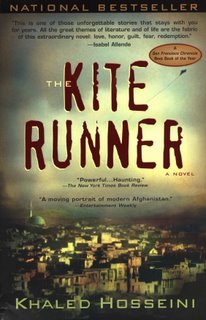 I just finished a fantastic book. At JB's 30th surprise party this past January, I asked everyone who wanted to bring a gift, to bring their favorite book! I, honestly, was thrilled with this idea, and will probably do it again in the future. John got some great books and has read many of them. He has yet to read The Kite Runner, a gift from our friends Tia and her fiancee' Rob. However, I am now done with it. I wish I wasn't. I wish the characters were still moving forward. I wish I could continue to look into their lives. There are so many things I still want to see them do.
Now let me preface this glowing recommendation by telling you that this is not a light-hearted read. It is a very deep and moving book about a young Muslim boy growing up in Afghanistan during the last peaceful days of the monarchy, just before his country's revolution and its invasion by Russian forces. Written by Khaled Hosseini, he himself grew up in Afghanistan during the era that the book is set. He paints an amazing picture of a beautiful country torn apart by war.
It is also a mature read with very mature themes. The language is not too bad which I was thankful for, but the subject matter is very mature and definitely not for everyone. This was borderline "too deep" for me.
That being said, let me just say that Monday evening while JB was on call I laid in bed as 9:00 turned to 10 and 10 to 11 and 11 pushed its way toward midnight trying as hard as I could to get to a stopping point in this book -- a spot that I felt comfortable leaving the characters at until I could pick them up again. I finally did stop only to pick it up the next day during my lunch break and flip pages feverishly, attempting to finish before I had to return to work. It is actually completely irresistible. The characters are so beautifully painted and the descriptions so vivid that you keep forgetting this is not a biography -- forgetting that it is simply a piece of historical fiction. It is amazing, and if you can handle a deep, sad, and moving read, then give this a try.
WARNING! SPOILER AHEAD!
Okay, so if you plan to read the book, I'd suggest you stop reading this post immediately. I want to discuss a section of this book that really moved me due to its connection to infertility. This spoiler will not ruin the book but is definitely not preferable.
Midway through the book, the young couple, Amir and Soraya get married. As the years of their marriage ticked by, I immediately knew where this was going. Time to have the kids. I groaned a little internally knowing that yet again another couple would decide to try and "presto!" have a baby just like they tell you it happens in your health class in high school. Could anyone paint a realistic picture? That sometimes it doesn't happen like that?
I shouldn't have doubted this author's ability to paint a picture with the real world painted all over it. He painted the truth. That ometimes "Presto" isn't a magic word.
So I include a passage here. This passage so amazing represented what infertility is like in a few quick pages. It was quite breathtaking and emotional for me to read.
So I read:
 I just finished a fantastic book. At JB's 30th surprise party this past January, I asked everyone who wanted to bring a gift, to bring their favorite book! I, honestly, was thrilled with this idea, and will probably do it again in the future. John got some great books and has read many of them. He has yet to read The Kite Runner, a gift from our friends Tia and her fiancee' Rob. However, I am now done with it. I wish I wasn't. I wish the characters were still moving forward. I wish I could continue to look into their lives. There are so many things I still want to see them do.
Now let me preface this glowing recommendation by telling you that this is not a light-hearted read. It is a very deep and moving book about a young Muslim boy growing up in Afghanistan during the last peaceful days of the monarchy, just before his country's revolution and its invasion by Russian forces. Written by Khaled Hosseini, he himself grew up in Afghanistan during the era that the book is set. He paints an amazing picture of a beautiful country torn apart by war.
It is also a mature read with very mature themes. The language is not too bad which I was thankful for, but the subject matter is very mature and definitely not for everyone. This was borderline "too deep" for me.
That being said, let me just say that Monday evening while JB was on call I laid in bed as 9:00 turned to 10 and 10 to 11 and 11 pushed its way toward midnight trying as hard as I could to get to a stopping point in this book -- a spot that I felt comfortable leaving the characters at until I could pick them up again. I finally did stop only to pick it up the next day during my lunch break and flip pages feverishly, attempting to finish before I had to return to work. It is actually completely irresistible. The characters are so beautifully painted and the descriptions so vivid that you keep forgetting this is not a biography -- forgetting that it is simply a piece of historical fiction. It is amazing, and if you can handle a deep, sad, and moving read, then give this a try.
WARNING! SPOILER AHEAD!
Okay, so if you plan to read the book, I'd suggest you stop reading this post immediately. I want to discuss a section of this book that really moved me due to its connection to infertility. This spoiler will not ruin the book but is definitely not preferable.
Midway through the book, the young couple, Amir and Soraya get married. As the years of their marriage ticked by, I immediately knew where this was going. Time to have the kids. I groaned a little internally knowing that yet again another couple would decide to try and "presto!" have a baby just like they tell you it happens in your health class in high school. Could anyone paint a realistic picture? That sometimes it doesn't happen like that?
I shouldn't have doubted this author's ability to paint a picture with the real world painted all over it. He painted the truth. That ometimes "Presto" isn't a magic word.
So I include a passage here. This passage so amazing represented what infertility is like in a few quick pages. It was quite breathtaking and emotional for me to read.
So I read:
That was the year that Soraya and I began trying to have a child.
The idea of fatherhood unleashed a swirl of emotions in me. I found it frightening, invigorating, daunting, and exhilarating all at the same time. What sort of father would I make, I wondered. I wanted to be just like Baba and I wanted to be nothing like him.
But a year passed and nothing happened. With each cycle of blood, Soraya grew more frustrated, more impatient, more irritable. By then, her mother's initially sublte hints had become over, as in "Kho dega!" So! "When am I going to sing alahoo for my little nawasa?" Her father, ever the Pashtun, never made any queries -- doing so meant alluding to a sexual act between his daughter and a man, even if the man in question had been married to her for over four years. But his eyes perked up when his wife teased us about a baby.
"Sometimes, it takes a while," I told Soraya one night.
"A year isn't a while, Amir!" she said, in a terse voice so unlike her. "Something's wrong. I know it."
"Then let's see a doctor."
Dr. Rosen, a round-bellied man with a plump face and small even teeth, spoke with a faint Eastern European accent, something remotely Slavic. He had a passion for trains -- his office was littered with books about the history of railroads, model locomotives, paintings of trains trundling on the tracks through green hills and over bridges. A sign above his desk read, LIFE IS A TRAIN, GET ON BOARD.
He laid out a plan for us. I'd get checked first. "Men are easy," he said, fingers tapping on his mahogany desk. "A man's plumbing is like his mind: simple, very few surprises. You ladies, on the other hand ... well, God put a lot of thought into making you." I wondered if he fed that bit about plumbing to all of his couples.
"Lucky us," Soraya said.
Dr. Rosen laughed. It fell a few notches short of genuine. He gave me a lab slip and a plastic jar, handed Soraya a request for some routine blood tests. We shook hands. "Welcome aboard," he said, as he showed us out.
***
I passed with flying colors.
The next few months were a blur of tests on Soraya: Basal body temperatures, blood tests for every conceivable hormone, urine tests, something called a "Cervical Mucus Test," ultrasounds, more blood tests, and more urine tests. Soraya underwent a procedure called a hysteroscopy -- Dr. Rosen inserted a telescope into Soraya's uterus and took a look around. He found nothing. "The plumbing's clear," he announced, snapping off his latex gloves. I wished he'd stop calling it that -- we weren't bathrooms. When the tests were over, he explained that he couldn't explain why we couldn't have kids. And, apparently, that wasn't so unusual. It was called "Unexplained infertility."
Then came the treatment phase. We tried a drug called Clomiphene, and hMG, a series of shots which Soraya gave to herself. When these failed, Dr. Rosen advised in vitro fertilization. We received a polite letter from our HMO, wishing us the best of luck, regretting they couldn't cover the cost.
We used the advance I had received for my novel to pay for it. IVF proved lengthy, meticulous, frustrating, and ultimately unsuccessful. After months of sitting in waiting rooms, reading magazines like Good Housekeeping and Reader's Digest, after endless paper gowns and cold, sterile exam rooms lit by fluorescent lights, the repeated humiliation of discussing every detail of our sex life with a total stranger, the injections and probes and specimen collections, we went back to Dr. Rosen and his trains.
He sat across from us, tapped his desk with his fingers, and used the word "adoption" for the first time.
Soraya cried all the way home.
Soraya cried all the way home.
Soraya broke the news to her parents the weekend after our last visit with Dr. Rosen. We were sitting on picnic chairs in the Taheris' backyard, grilling out and sipping yogart dogh. It was an early evening in March 1991. Her mother had watered the roses and her new honeysuckles, and their fragrance mixed with the smell of cooking fish. Twice already, she had reached across the chair to caress Soraya's hair and say, "God knows best, bachem. Maybe it wasn't meant to be."
Soraya kept looking down at her hands. She was tired, I knew, tired of it all.
A few months later, we used the advance for my second novel and placed a down payment on a pretty, two-bedroom Victorian house in San Francisco's Bernal Heights. Sometimes, Soraya sleeping next to me, I lay in bed and listened to the screen door swinging open and shut with the breeze, to the crickets chirping in the yard. And I could almost feel the emptiness of Soraya's womb, like it was a living, breathing thing. It had seeped into our marriage, that emptiness, into our laughs, and our lovemaking. And late at night, in the darkness of our room, I'd feel it rising from Soraya and settling between us. Sleeping between us. Like a newborn child.
(To read more ... buy the book. Or borrow it from me!)
(To read more ... buy the book. Or borrow it from me!)
Wednesday, February 29, 2012
Ponderances of Trust
I originally wrote this post in August of 2008, just a few months after our son, Isaac, joined our family via adoption.
To trust or not to trust.
I suppose I should follow that by saying: "That is the question."
In fear of being incredibly cliche', I'll refrain.
But as I have moved throughout a rainy Saturday and into Sunday (which turned out not to be nearly as rainy as everyone predicted), and as I caught up at work and attempted to entertain a dog without a yard, Frisbee, or anything outside my living room, my thoughts were on trust. I had a lot of free time, as I often do, when JB is on call.
I think these thoughts stemmed from a conversation I had held the evening prior with a friend. And then it stretched back into a discussion JB and I had just a few days prior to that. A discussion on what it means to trust the Lord and how easy it is to say, "Trust Him," when your own lack of trust finally paid off.
I spent five years arguing with God and refusing to trust Him, because, well, He was not doing what He was supposed to do! I'd sit in front of the Bible I was unable to read each morning and tell Him everything. I'd tell Him that I thought He was unfair. I'd tell Him that I thought He forgot about me. I'd tell Him that I could not possibly take one more shot, one more appointment, one more unanswered prayer. "How many people need to pray?" I asked Him all too many times. I'd sob. I'd beg. I'd yell. I'd give up.
I wouldn't call anything I did during those days, trust.
In fact, I can honestly say that my trust for the Lord didn't enter into the picture until months after we moved to Florida. It was after our fourth failed IVF, when JB was working horrid hours at the hospital, and I was attempting to train our fifteen pounds of spotted fur not to pee in the kitchen or chew the baseboards, that I began to finally give up. I think giving up is a key ingredient in trust. It wasn't until I finally threw my hands up in despair and said I could no longer do it or seek it or try it, that I began to trust God. In a way what I did was give up on the idea of being a mom. In another way what I did was decide to let God decide what was best for my life. I didn't know if I would like the decision He made. But I was done trying to make my own.
I would not call that trust perfect. There were days that I still broke down. There were days that I still questioned His decisions. There were days that I still felt sorry for myself and had a good cry. I still could not attend first birthday parties or baby showers. I still had trouble with pregnancy announcements and bulging bellies. We kept finding other fun things to do on Mother's Day instead of going to church. In fact, it was one month after Isaac was born, when I was in fact, unknowingly pregnant, that I had yet another good cry, lying in the bed next to JB one night. It had been a long time since I had cried so hard that I had trouble lying down and had to sit up to make sure the tears didn't choke me. I think it took JB by surprise a little bit to see me back in that place. We were so happy with Isaac. We truly felt our lives were complete. And yet there was a part of me that still felt sad that we were infertile (even though we actually no longer were). And another part of me that was still very afraid of having to do IVF again someday. It was a lot easier to trust when I wasn't doing a treatment cycle. How could I trust when constantly reminded -- a necessary part of infertility treatments?
Our church has begun a series on parenting. Had it come just one year ago, I know I'd be taking a short siesta from services. The guest speaker, on the first day of the series, encouraged us not to stop coming if we weren't currently parents -- telling us that we could still get something out of the sermon. I looked at JB, and we shared a knowing glance. How many times had we been told that before? How many times had I attended an event structured for mothers when I wasn't one? On the drive over I'd try to convince myself with the thought that I should be healthy enough to gleam something from the speaker's words despite my own pain. Then I'd have a good cry in the bathroom during a break, put on a happy face, and try all over again.
In the midst of our infertility journey, I finally gave up on doing that. It wasn't that I couldn't take something from the words. It was that the words were too painful to hear. Parents sat around nodding their heads or emitting a knowing chuckle. I just sat there wishing that I had a nod to give. The emotions would come running back. The feelings would come swarming over me, even if I had thought they were far away. I suppose they were never very far at all.
Don't get me wrong. I think a series on parenting is a great idea. I think I'll learn a lot from it, especially considering I've avoided these sermons for so long. But on the way home that morning I told JB that my heart hurt for the people who hurt during that discussion. As always, I thought of people who weren't holding an Isaac during the sermon. And especially those people who weren't sitting next to a John. Not seeing your dreams come true is a painful reality, and my heart hurt because now my dreams were coming true while others still waited.
I find it important, when sharing the story of our family to make sure that I don't tell people that if they trust God, everything will work out okay. For some people this may be true in a matter of days or weeks or months. For me, it was a matter of years. For Abraham and Sarah in then New Testament, it was a matter of decades. And for others, there dream may never come true on this Earth.
Instead I tell people that trust is hard. It is painful. And it can take a very long time to learn. In my case, I don't think I ever achieved full trust prior to Isaac's arrival. I like to believe I gained better trust. I like to believe I was getting there. But I hadn't arrived. I am not sure you ever actually do. All you can do is to try each day to remember that He does have a plan. It may make no sense. It may make sense in the future as I believe our struggles now do. But it many not make sense until we stand before our Heavenly Father someday. We may not ever see his plan with our earthly eyes.
My prayer today is that I am able to remember, someday in the future when I am faced with obstacles that impact my trust again, this period of my life. I hope you are able to do the same. I hope you are able to look at our story and see that God is present. In our case we can all see it now. That may not be the case for future events in my life or in your's. But He is there. And He does care.
I pray that if you are someone today who is hurting, you'll come to find just a bit more trust today. Don't try to get to 100%. Just try to get 1% better than you were yesterday. Just try to remember a little bit more that He does love you. He is hurting with you. And He does have your best interest in mind.
If this isn't you who are hurting, think of someone else who is. Make it a point to think of them during a painful sermon. Just having people telling me that my grief was legitimate helped me so much. People don't think I am stupid! It's okay that I am sad. They don't understand but they empathize. This made me feel so much better. Think of someone who is alone or grieving a loss the next time you are nodding in agreement with the pastor in church or celebrating an event with your family. A hug. An email. An invitation to dinner. We need each other in this world. I don't know what I would have done without my faithful friends during my darkest hours -- friends that trusted for me when I had no more trust to give.
God loves you. He remembers you. He has a plan.
To trust or not to trust.
I suppose I should follow that by saying: "That is the question."
In fear of being incredibly cliche', I'll refrain.
But as I have moved throughout a rainy Saturday and into Sunday (which turned out not to be nearly as rainy as everyone predicted), and as I caught up at work and attempted to entertain a dog without a yard, Frisbee, or anything outside my living room, my thoughts were on trust. I had a lot of free time, as I often do, when JB is on call.
I think these thoughts stemmed from a conversation I had held the evening prior with a friend. And then it stretched back into a discussion JB and I had just a few days prior to that. A discussion on what it means to trust the Lord and how easy it is to say, "Trust Him," when your own lack of trust finally paid off.
I spent five years arguing with God and refusing to trust Him, because, well, He was not doing what He was supposed to do! I'd sit in front of the Bible I was unable to read each morning and tell Him everything. I'd tell Him that I thought He was unfair. I'd tell Him that I thought He forgot about me. I'd tell Him that I could not possibly take one more shot, one more appointment, one more unanswered prayer. "How many people need to pray?" I asked Him all too many times. I'd sob. I'd beg. I'd yell. I'd give up.
I wouldn't call anything I did during those days, trust.
In fact, I can honestly say that my trust for the Lord didn't enter into the picture until months after we moved to Florida. It was after our fourth failed IVF, when JB was working horrid hours at the hospital, and I was attempting to train our fifteen pounds of spotted fur not to pee in the kitchen or chew the baseboards, that I began to finally give up. I think giving up is a key ingredient in trust. It wasn't until I finally threw my hands up in despair and said I could no longer do it or seek it or try it, that I began to trust God. In a way what I did was give up on the idea of being a mom. In another way what I did was decide to let God decide what was best for my life. I didn't know if I would like the decision He made. But I was done trying to make my own.
I would not call that trust perfect. There were days that I still broke down. There were days that I still questioned His decisions. There were days that I still felt sorry for myself and had a good cry. I still could not attend first birthday parties or baby showers. I still had trouble with pregnancy announcements and bulging bellies. We kept finding other fun things to do on Mother's Day instead of going to church. In fact, it was one month after Isaac was born, when I was in fact, unknowingly pregnant, that I had yet another good cry, lying in the bed next to JB one night. It had been a long time since I had cried so hard that I had trouble lying down and had to sit up to make sure the tears didn't choke me. I think it took JB by surprise a little bit to see me back in that place. We were so happy with Isaac. We truly felt our lives were complete. And yet there was a part of me that still felt sad that we were infertile (even though we actually no longer were). And another part of me that was still very afraid of having to do IVF again someday. It was a lot easier to trust when I wasn't doing a treatment cycle. How could I trust when constantly reminded -- a necessary part of infertility treatments?
Our church has begun a series on parenting. Had it come just one year ago, I know I'd be taking a short siesta from services. The guest speaker, on the first day of the series, encouraged us not to stop coming if we weren't currently parents -- telling us that we could still get something out of the sermon. I looked at JB, and we shared a knowing glance. How many times had we been told that before? How many times had I attended an event structured for mothers when I wasn't one? On the drive over I'd try to convince myself with the thought that I should be healthy enough to gleam something from the speaker's words despite my own pain. Then I'd have a good cry in the bathroom during a break, put on a happy face, and try all over again.
In the midst of our infertility journey, I finally gave up on doing that. It wasn't that I couldn't take something from the words. It was that the words were too painful to hear. Parents sat around nodding their heads or emitting a knowing chuckle. I just sat there wishing that I had a nod to give. The emotions would come running back. The feelings would come swarming over me, even if I had thought they were far away. I suppose they were never very far at all.
Don't get me wrong. I think a series on parenting is a great idea. I think I'll learn a lot from it, especially considering I've avoided these sermons for so long. But on the way home that morning I told JB that my heart hurt for the people who hurt during that discussion. As always, I thought of people who weren't holding an Isaac during the sermon. And especially those people who weren't sitting next to a John. Not seeing your dreams come true is a painful reality, and my heart hurt because now my dreams were coming true while others still waited.
I find it important, when sharing the story of our family to make sure that I don't tell people that if they trust God, everything will work out okay. For some people this may be true in a matter of days or weeks or months. For me, it was a matter of years. For Abraham and Sarah in then New Testament, it was a matter of decades. And for others, there dream may never come true on this Earth.
Instead I tell people that trust is hard. It is painful. And it can take a very long time to learn. In my case, I don't think I ever achieved full trust prior to Isaac's arrival. I like to believe I gained better trust. I like to believe I was getting there. But I hadn't arrived. I am not sure you ever actually do. All you can do is to try each day to remember that He does have a plan. It may make no sense. It may make sense in the future as I believe our struggles now do. But it many not make sense until we stand before our Heavenly Father someday. We may not ever see his plan with our earthly eyes.
My prayer today is that I am able to remember, someday in the future when I am faced with obstacles that impact my trust again, this period of my life. I hope you are able to do the same. I hope you are able to look at our story and see that God is present. In our case we can all see it now. That may not be the case for future events in my life or in your's. But He is there. And He does care.
I pray that if you are someone today who is hurting, you'll come to find just a bit more trust today. Don't try to get to 100%. Just try to get 1% better than you were yesterday. Just try to remember a little bit more that He does love you. He is hurting with you. And He does have your best interest in mind.
If this isn't you who are hurting, think of someone else who is. Make it a point to think of them during a painful sermon. Just having people telling me that my grief was legitimate helped me so much. People don't think I am stupid! It's okay that I am sad. They don't understand but they empathize. This made me feel so much better. Think of someone who is alone or grieving a loss the next time you are nodding in agreement with the pastor in church or celebrating an event with your family. A hug. An email. An invitation to dinner. We need each other in this world. I don't know what I would have done without my faithful friends during my darkest hours -- friends that trusted for me when I had no more trust to give.
God loves you. He remembers you. He has a plan.
Trust in the Lord with all your heart and lean not onto your own understanding. In all your ways acknowledge Him, and He shall direct your paths.
Thursday, February 9, 2012
IVF's Moral Dilemmas
I found your blog through a friend's blog and it has been incredibly encouraging as my husband & I struggle with infertility. We're now discussing how far we will go down the fertility pathway. We're curious as to how you handled the ethical, biblical perspective as you approached IVF. There is obviously much to consider but with your experience we'd love to hear from you!
I'd like to answer this question, but I definitely want to begin with a disclaimer. What I write in the paragraphs to follow is only my opinion. This is a very deep topic with a lot of gray areas. I respectfully acknowledge that someone reading my blog may see things quite differently or may have even done things quite differently. In fact, I have very close friends who did things differently. I could not even begin to judge them. Each infertility situation is unique and requires its own set of praying and seeking the Lord's will. Please keep this in mind as you read what I have to say.
Also, please help me out by answering my question at the end of the post. I'd like help from readers with things I left out or didn't touch on in this post so that I can make this as complete as possible.
So, without further ado . . . here goes.
* * * * *
The very beginning
I can vividly remember every detail of the day that the words "IVF" were first uttered in my direction. We were sitting in the Reproductive Endocrinologist's Office at the Mayo Clinic in Rochester, Minnesota. I never, ever, ever thought that I would be "one of those women" who had to do IVF. That was for other women. Not for me. It was completely shocking and overwhelming and upsetting all at the same time. I felt like I could not catch my breath. IVF? JB squeezed my hand in an attempt to comfort me from the news we truly thought we would never receive, but I could tell that the news was just as devastating to him as it was to me.
Not only is IVF extremely expensive, usually around $10,000 per attempt at a minimum, but it is racked with moral and ethical decisions and dilemmas. While the Catholic church unequivocally condemns any form of IVF as stepping outside of God's will for your life, most protestants, of which I am one, believe that infertility treatments and IVF is morally acceptable if done within strict limits. Where those limits actually lie is the big question.
A Diagnosis
In the two years that had preceded that visit where we first heard "IVF" come tumbling out of the nurse's mouth, we had done a myriad of other infertility treatments. I had had an MRI on my pituitary to determine why I didn't ovulate. I had had blood tests and taken shots and been tested in any and all ways the doctors could think of. JB had been tested. In the end, all they knew was that I didn't ovulate due to a condition called polycystic ovarian syndrome. While I did not have the weight gain, hair growth, and acne usually associated with the condition, I did have the absence of cycles and the pearl like follicles in my ovaries that indicated PCOS was the reason we had been unable to conceive.
Clomid
They started me on Clomid with the hopes that it would help me to ovulate. All it did was make me go crazy. To this day, JB says that Clomid was the worst drug I had to take. I don't remember that I was that difficult to live with, but JB would definitely beg to differ. Three cycles later and we were no better off.
Introduction to IUI
We then moved on to IUI (intrauterine insemination) or artificial insemination. IUI is a procedure where the sperm (either the husband's or a donor's) is injected directly into the woman with the hope that it will increase her chances of conception. In my case, I was given drugs to help produce follicles (which contain eggs) and then I would go in for the IUI procedure and take a shot to help release those follicles. Technically I could have just taken the drugs and skipped the actual IUI procedure -- just trying on our own instead. However, once you spend so much on the drugs needed to help you ovulate, the actual cost of the IUI procedure is quite minimal, and it makes sense to add it to the schedule.
Where IUI gets tricky is that you want to have a good number of follicles. A good number is usually 3 or 4. Too few and you feel your odds are incredibly low. Too many and you worry that your odds are incredibly high . . . not for success but for too much success: multiples.
Multiples
A side note here about multiples. The first time I walked into Mayo Clinic, my Doctor said to me, "Triplets are bad, triplets are bad, triplets are bad ..." It was honestly, the very first thing he said! Now I know a few people who have had triplets, and their children are wonderful and definitely not "bad." However, my doctor's point was that in any pregnancy with triplets or higher, the chances of something being wrong with one of the children goes up incredibly. The odds of cerebral palsy, for instance, jumps by large percentages with every additional baby in utero. Mayo is therefore very cautious and attempts to prevent anything greater than twins from occurring.
We have all seen the stories on TV about families with 5, 6, 7, or even 8 babies born at once. Most of the time these occur during an IUI procedure -- where control of the number of embryos is limited. (The Gosselins are one of the most known examples.) Or they occur during a cancelled IUI procedure -- where the physician will not do the IUI procedure due to the high number of follicles present, but the couple try on their own anyway. They may also occur during IVF -- especially at centers that are not cautious about the risk for multiples. Octamom Nadya Suleman fits into this category. I strongly encourage people to find a physician who shares or at least respects your viewpoint so as to prevent heartbreaking choices or consequences.
In Kate Gosselin's book: Multiple Blessings on their brood of sextuplets. In her case, they had not seen what appeared to be 7 follicles (which hold the eggs) on ultrasound. It was only after she found out she was pregnant that they realized their count had been off. (One embryos did not survive resulting in 6 babies.) Figuring out how many are possible is not really a science. My doctor often told me it was more of an art. You have to be very careful when proceeding in order to prevent high order multiples.
Selective reduction
IUI is a difficult procedure for a couple who, like JB and myself, do not believe in "selective reduction." Selective reduction is a procedure where a doctor goes in and aborts a certain number of babies in a pregnancy which has multiple babies. Usually this is only attempted when the number of babies is 4 or greater. With 3 babies, the risks of something going wrong with the selective reduction procedure is equivalent to that of carrying triplets so it is often not attempted. But in 4 or more, doctors will advise that 2 or more of the babies are killed so the others will survive and/or have a better chance at a healthy life.
For JB and myself, this was not up for debate. We would never, no matter what, consider selective reduction. This meant that we knew we had to be very cautious when doing the IUI procedure. Too many follicles could result in too many babies and a possibly heartbreaking outcome.
Four more BFN's
We attempted the IUI procedure four times. Two times we achieved a good number of follicles (3 or 4) and we did the procedure. Both times this procedure resulted in a BFN (big fat negative). One time they scrapped my cycle altogether as I had way too many follicles. This was incredibly disappointing as I had taken all the drugs to produce the follicles only to have to stop everything and start all over again. A fourth time, they refused to the IUI procedure but told us that we could take the shot and try on our own instead. This was done "under the table" so to speak. The doctor said he would never officially admit that he had told us to take the shot. But he kept reminding us that it was in our refrigerator.
This was the first point in our infertility journey that we reached our first sort of moral crossroads. Was it smart for us to attempt to get pregnant knowing that we could possibly have as many as 5 babies, knowing that that was not safe, and knowing that it could potentially harm one of our children? We met with our good friends Dave and Lesley and had a long talk. We weighed the odds that it would work and the odds that all of the follicles would work and did decide to try on our own. In the end, we did not get pregnant. However, this crossroads was the first time where we realized that what we wanted needed to line up with what God wanted. We knew that we could not put what we selfishly wanted ahead of what was in God's commandments at any point in this infertility journey.
IVF
It was after this fourth failed attempt with IUI that the nurse asked us if we had considered IVF (invitro fertilization). I remember her saying the words, and I remember wanting her to take them back. IVF is the granddaddy of all infertility treatments. It was thing we thought we'd never have to do. And now, here we were. IVF. I had remembered lying in bed at night saying to JB, "What if we have to do IVF?" He assured me that that wouldn't happen to us. We were just dealing with my own ovulatory disorder. IUI would be all we needed. Now, here we were. Prime candidates for IVF.
I asked my doctor what he thought my odds were with success through IVF. "You," he said, patting my arm, "Are the woman IVF was made for." I was the healthy girl with no real problems other than a minor ovulatory disorder.
Our moral absolutes regarding IVF
The issue with IVF is that you aren't just injecting sperm and letting "nature do it's thing." You are creating life. My husband and I believe that life begins at the moment conception occurs. We therefore believe that we are creating life when doing IVF.
That being the case, when we decided to do IVF, we set the following guidelines for ourselves:
IVF involves the "harvesting" of my eggs. After the eggs are harvested, they are fertilized in a test tube in a laboratory (thus the expression "test tube baby.") A select number of the fertilized embryos are then injected back into me in a process called a "transfer."
JB and I did 2 harvests and 4 transfers. For our first harvest, we decided to allow them to fertilize 12 eggs. Some couples do not have this luxury. They only manage to get a few eggs. However, in my particular case, I produced a large number of eggs when given the proper medication -- dozens actually. We therefore had to carefully contemplate how many eggs to allow the doctors to fertilize.
The doctors, of course, wanted to fertilize every single one. However, we held fast to our belief that we would only fertilize what we felt comfortable using. How did we decide on 12? For us this was based on "playing the numbers." I am having trouble recalling the exact odds that we were given, but we played with numbers on a pad of paper for days and weeks before deciding that 12 would be a good number for us. We were "banking" on approximately 10 of the embryos fertilizing, and of those 10, about 40% resulting in a successful pregnancy. This would give us approximately 4 children. That sounded about right to us.
Of course those of you following my story know that this wasn't the case at all. When they took those 12 eggs and fertilized them, to their great surprise, only 6 fertilized. They realized at this point that we were dealing with yet another infertility issue. We had a problem with sperm binding. We don't know if it was JB's fault or my fault or the fault of both of our materials put together, but either way, we only got 6 embryos. In the months and years to come, JB would insist that the problem was his just so that I would quit saying that our inability to have children was all my fault and he should go and find another wife. It was sweet of him.
Blasts
We transferred 2 of those embryos and did not achieve a successful pregnancy. In addition, 1 of those embryos was kept out longer before it was frozen. This is called a "blastocyst." Supposedly, these "blasts" have a higher rate of success. In our case, our "blast" died before it could be frozen. This is another area of moral dilemma. Some people do not believe you should allow the docs to create a blast. It was our belief that these embryos would live or die based on how good they were and that they would live or die inside or outside of me. We therefore did not have an issue with the blastocyst. If I were ever going to do IVF again, however, I would, personally, spend more time researching this particular issue. I feel this is one area we were not as knowledgeable about as we could have been.
Harvest #2
At this point we had 3 embryos left. We did a second transfer which also resulted in a negative pregnancy.
With just 1 embryo left, we decided to leave that 1 embryo frozen and do another harvest. This time we decided to fertilize 14 embryos. Twelve of them were successfully fertilized using a process called ICSI. This is where each egg is injected with a single sperm (instead of just throwing them in a tube dish together and seeing what happens.) Unfortunately, one of the blasts died this time again leaving 11 of embryos and 12 if you added our previous 1 to that batch. We transferred 2 more and did not have a successful outcome. We did one more with 3 embryos this time and did not have a successful outcome. This left 7 embryos remaining when we decided enough was enough! We currently have 7 embryos stored at Mayo Clinic in Rochester, Minnesota that we are 100% committed to returning for at some point.
Summary
It is our belief that the Lord is the creator of life. He creates follicles and sperm and eggs and embryos. Even with all the help the doctors provide, the Lord controls the final outcome. In our case, that was eleven negative results. Eleven expensive and extremely disappointing results. This is where infertility treatments are so difficult. No amount of money or prestige or power can give you a biological child. Only the Lord can do that.
We felt that morally, we needed to remember, at all times, that the Lord is the maker of life. We needed to not be selfish and put what we wanted in front of what the Lord had ordained at any point. To this day, I cannot tell you 100% that we did everything perfectly. I feel peace about our decisions, but I know that there is a chance we did something that was not morally acceptable. But we did the best we knew how to do with prayer and guidance from people and organizations we trusted.
Resources and questions
As I write this, I am not sure that I have answered all questions on this topic. I wanted to share three additional documents that helped guide us in our decision making.
I wonder if any of you who have read this whole post could help me out. I'd like to make sure I was very clear about everything in this post so that I can post this on the side of my blog as a resource. What additional questions do you have after reading? Please ask away! I will then go back through the post and edit it to reflect your questions (and also answer them in the the comments section.)
Thanks to my anonymous question asker. I hope I did a good job sharing our own journey and how we attempted to stay in God's will as Christians while in the midst of a very gray and murky area. Let me know what else I need to add!
In the two years that had preceded that visit where we first heard "IVF" come tumbling out of the nurse's mouth, we had done a myriad of other infertility treatments. I had had an MRI on my pituitary to determine why I didn't ovulate. I had had blood tests and taken shots and been tested in any and all ways the doctors could think of. JB had been tested. In the end, all they knew was that I didn't ovulate due to a condition called polycystic ovarian syndrome. While I did not have the weight gain, hair growth, and acne usually associated with the condition, I did have the absence of cycles and the pearl like follicles in my ovaries that indicated PCOS was the reason we had been unable to conceive.
Clomid
They started me on Clomid with the hopes that it would help me to ovulate. All it did was make me go crazy. To this day, JB says that Clomid was the worst drug I had to take. I don't remember that I was that difficult to live with, but JB would definitely beg to differ. Three cycles later and we were no better off.
Introduction to IUI
We then moved on to IUI (intrauterine insemination) or artificial insemination. IUI is a procedure where the sperm (either the husband's or a donor's) is injected directly into the woman with the hope that it will increase her chances of conception. In my case, I was given drugs to help produce follicles (which contain eggs) and then I would go in for the IUI procedure and take a shot to help release those follicles. Technically I could have just taken the drugs and skipped the actual IUI procedure -- just trying on our own instead. However, once you spend so much on the drugs needed to help you ovulate, the actual cost of the IUI procedure is quite minimal, and it makes sense to add it to the schedule.
Where IUI gets tricky is that you want to have a good number of follicles. A good number is usually 3 or 4. Too few and you feel your odds are incredibly low. Too many and you worry that your odds are incredibly high . . . not for success but for too much success: multiples.
Multiples
A side note here about multiples. The first time I walked into Mayo Clinic, my Doctor said to me, "Triplets are bad, triplets are bad, triplets are bad ..." It was honestly, the very first thing he said! Now I know a few people who have had triplets, and their children are wonderful and definitely not "bad." However, my doctor's point was that in any pregnancy with triplets or higher, the chances of something being wrong with one of the children goes up incredibly. The odds of cerebral palsy, for instance, jumps by large percentages with every additional baby in utero. Mayo is therefore very cautious and attempts to prevent anything greater than twins from occurring.
We have all seen the stories on TV about families with 5, 6, 7, or even 8 babies born at once. Most of the time these occur during an IUI procedure -- where control of the number of embryos is limited. (The Gosselins are one of the most known examples.) Or they occur during a cancelled IUI procedure -- where the physician will not do the IUI procedure due to the high number of follicles present, but the couple try on their own anyway. They may also occur during IVF -- especially at centers that are not cautious about the risk for multiples. Octamom Nadya Suleman fits into this category. I strongly encourage people to find a physician who shares or at least respects your viewpoint so as to prevent heartbreaking choices or consequences.
In Kate Gosselin's book: Multiple Blessings on their brood of sextuplets. In her case, they had not seen what appeared to be 7 follicles (which hold the eggs) on ultrasound. It was only after she found out she was pregnant that they realized their count had been off. (One embryos did not survive resulting in 6 babies.) Figuring out how many are possible is not really a science. My doctor often told me it was more of an art. You have to be very careful when proceeding in order to prevent high order multiples.
Selective reduction
IUI is a difficult procedure for a couple who, like JB and myself, do not believe in "selective reduction." Selective reduction is a procedure where a doctor goes in and aborts a certain number of babies in a pregnancy which has multiple babies. Usually this is only attempted when the number of babies is 4 or greater. With 3 babies, the risks of something going wrong with the selective reduction procedure is equivalent to that of carrying triplets so it is often not attempted. But in 4 or more, doctors will advise that 2 or more of the babies are killed so the others will survive and/or have a better chance at a healthy life.
For JB and myself, this was not up for debate. We would never, no matter what, consider selective reduction. This meant that we knew we had to be very cautious when doing the IUI procedure. Too many follicles could result in too many babies and a possibly heartbreaking outcome.
Four more BFN's
We attempted the IUI procedure four times. Two times we achieved a good number of follicles (3 or 4) and we did the procedure. Both times this procedure resulted in a BFN (big fat negative). One time they scrapped my cycle altogether as I had way too many follicles. This was incredibly disappointing as I had taken all the drugs to produce the follicles only to have to stop everything and start all over again. A fourth time, they refused to the IUI procedure but told us that we could take the shot and try on our own instead. This was done "under the table" so to speak. The doctor said he would never officially admit that he had told us to take the shot. But he kept reminding us that it was in our refrigerator.
This was the first point in our infertility journey that we reached our first sort of moral crossroads. Was it smart for us to attempt to get pregnant knowing that we could possibly have as many as 5 babies, knowing that that was not safe, and knowing that it could potentially harm one of our children? We met with our good friends Dave and Lesley and had a long talk. We weighed the odds that it would work and the odds that all of the follicles would work and did decide to try on our own. In the end, we did not get pregnant. However, this crossroads was the first time where we realized that what we wanted needed to line up with what God wanted. We knew that we could not put what we selfishly wanted ahead of what was in God's commandments at any point in this infertility journey.
IVF
It was after this fourth failed attempt with IUI that the nurse asked us if we had considered IVF (invitro fertilization). I remember her saying the words, and I remember wanting her to take them back. IVF is the granddaddy of all infertility treatments. It was thing we thought we'd never have to do. And now, here we were. IVF. I had remembered lying in bed at night saying to JB, "What if we have to do IVF?" He assured me that that wouldn't happen to us. We were just dealing with my own ovulatory disorder. IUI would be all we needed. Now, here we were. Prime candidates for IVF.
I asked my doctor what he thought my odds were with success through IVF. "You," he said, patting my arm, "Are the woman IVF was made for." I was the healthy girl with no real problems other than a minor ovulatory disorder.
Our moral absolutes regarding IVF
The issue with IVF is that you aren't just injecting sperm and letting "nature do it's thing." You are creating life. My husband and I believe that life begins at the moment conception occurs. We therefore believe that we are creating life when doing IVF.
That being the case, when we decided to do IVF, we set the following guidelines for ourselves:
- We would not rely on our own understanding. We would pray and seek the Lord's face in every decision we made.
- We would not move forward unless both of us were 100% on the same page.
- We would seek the opinion of others. Specifically, JB and I decided to follow the statements of Focus on the Family and the CMDA or Christian Medical and Dental Association. It was our hope that by aligning ourselves with two organizations and making sure we never stepped outside of their viewpoints, that we would be giving ourselves an extra bit of accountability. We never wanted what we wanted to move in front of what God's commandments were. We knew that with the money and pressure we could be swung into a faulty line of thinking if we didn't keep things in check. I strongly suggest that any Christian thinking of doing IVF finds an organization or two that can help guide them in their decision making.
- We would never create an embryo (life) that we did not plan on giving a chance for life outside the womb. We therefore would limit the number of embryos that we fertilized. In our case, this most likely was the reason we had to do a second harvest for IVF. But for us, the extra money and drugs and headaches were worth it. Some people even choose to go farther and not freeze any embryos. I completely respect this decision. As one person noted in the comments of this post, the rate of survival in freezing and dethawing can be low. My husband and I came to understand through our own research that if they did not survive the freezing/thawing process, they would not survive had they been in the womb either. This is another topic that we should have done more research on, and I felt we probably "zipped" through too fast.
- We would never contemplate selective reduction. Ever. This meant that we would be very cautious when considering how many embryos to transfer.
- If for any reason we could not use the embryos we had created, we would (a) find a surrogate to carry the embryos for us OR (b) donate the embryos to another infertile couple. Reasons that we could not use the embryos would include my death or health.
- None of our embryos would be discarded or used for research, no matter what. We went as far as to create an "advanced directive" that left the embryos to my brother if JB and I were to both die. We wanted to make sure these embryos were not discarded. My brother has strict directions to donate these embryos to a Christian couple who would raise our biological children for the Lord.
- Mayo assured us that in their laboratory, they freeze before genetic transfer occurs. They therefore believe conception has not actually occurred when the freezing takes place. We decided not to believe this. If we were being overly cautious, then we were being overly cautious. We felt that we would continue with the thought that each embryo was life. If we got to heaven one day and found out that we were wrong, then so be it.
IVF involves the "harvesting" of my eggs. After the eggs are harvested, they are fertilized in a test tube in a laboratory (thus the expression "test tube baby.") A select number of the fertilized embryos are then injected back into me in a process called a "transfer."
JB and I did 2 harvests and 4 transfers. For our first harvest, we decided to allow them to fertilize 12 eggs. Some couples do not have this luxury. They only manage to get a few eggs. However, in my particular case, I produced a large number of eggs when given the proper medication -- dozens actually. We therefore had to carefully contemplate how many eggs to allow the doctors to fertilize.
The doctors, of course, wanted to fertilize every single one. However, we held fast to our belief that we would only fertilize what we felt comfortable using. How did we decide on 12? For us this was based on "playing the numbers." I am having trouble recalling the exact odds that we were given, but we played with numbers on a pad of paper for days and weeks before deciding that 12 would be a good number for us. We were "banking" on approximately 10 of the embryos fertilizing, and of those 10, about 40% resulting in a successful pregnancy. This would give us approximately 4 children. That sounded about right to us.
Of course those of you following my story know that this wasn't the case at all. When they took those 12 eggs and fertilized them, to their great surprise, only 6 fertilized. They realized at this point that we were dealing with yet another infertility issue. We had a problem with sperm binding. We don't know if it was JB's fault or my fault or the fault of both of our materials put together, but either way, we only got 6 embryos. In the months and years to come, JB would insist that the problem was his just so that I would quit saying that our inability to have children was all my fault and he should go and find another wife. It was sweet of him.
Blasts
We transferred 2 of those embryos and did not achieve a successful pregnancy. In addition, 1 of those embryos was kept out longer before it was frozen. This is called a "blastocyst." Supposedly, these "blasts" have a higher rate of success. In our case, our "blast" died before it could be frozen. This is another area of moral dilemma. Some people do not believe you should allow the docs to create a blast. It was our belief that these embryos would live or die based on how good they were and that they would live or die inside or outside of me. We therefore did not have an issue with the blastocyst. If I were ever going to do IVF again, however, I would, personally, spend more time researching this particular issue. I feel this is one area we were not as knowledgeable about as we could have been.
Harvest #2
At this point we had 3 embryos left. We did a second transfer which also resulted in a negative pregnancy.
With just 1 embryo left, we decided to leave that 1 embryo frozen and do another harvest. This time we decided to fertilize 14 embryos. Twelve of them were successfully fertilized using a process called ICSI. This is where each egg is injected with a single sperm (instead of just throwing them in a tube dish together and seeing what happens.) Unfortunately, one of the blasts died this time again leaving 11 of embryos and 12 if you added our previous 1 to that batch. We transferred 2 more and did not have a successful outcome. We did one more with 3 embryos this time and did not have a successful outcome. This left 7 embryos remaining when we decided enough was enough! We currently have 7 embryos stored at Mayo Clinic in Rochester, Minnesota that we are 100% committed to returning for at some point.
Summary
It is our belief that the Lord is the creator of life. He creates follicles and sperm and eggs and embryos. Even with all the help the doctors provide, the Lord controls the final outcome. In our case, that was eleven negative results. Eleven expensive and extremely disappointing results. This is where infertility treatments are so difficult. No amount of money or prestige or power can give you a biological child. Only the Lord can do that.
We felt that morally, we needed to remember, at all times, that the Lord is the maker of life. We needed to not be selfish and put what we wanted in front of what the Lord had ordained at any point. To this day, I cannot tell you 100% that we did everything perfectly. I feel peace about our decisions, but I know that there is a chance we did something that was not morally acceptable. But we did the best we knew how to do with prayer and guidance from people and organizations we trusted.
Resources and questions
As I write this, I am not sure that I have answered all questions on this topic. I wanted to share three additional documents that helped guide us in our decision making.
- CMDA's stance on IVF
- Standards for Life
- FOF's Views on IVF and embryo donation
- Nightlight Christian Embryo adoption
- Embryo Ethics: Does discarding unused embryos constitute murder?
- Ethics: In Vitro Fertilization (One Christian Minister's viewpoint on IVF)
- National Embryo Donation Center
I wonder if any of you who have read this whole post could help me out. I'd like to make sure I was very clear about everything in this post so that I can post this on the side of my blog as a resource. What additional questions do you have after reading? Please ask away! I will then go back through the post and edit it to reflect your questions (and also answer them in the the comments section.)
Thanks to my anonymous question asker. I hope I did a good job sharing our own journey and how we attempted to stay in God's will as Christians while in the midst of a very gray and murky area. Let me know what else I need to add!
Subscribe to:
Posts (Atom)